- How Much is $38 an Hour Annually?
- Understanding Hourly to Annual Salary Conversion
- Calculating Annual Salary from $38 an Hour
- Factors Affecting Annual Salary
- Comparing $38 an Hour to Other Salaries
- Managing Your Annual Earnings
- Is $38 an Hour a Good Salary?
- FAQs on $38 an Hour Salary
- Common Mistakes in Salary Calculations
- Conclusion
How Much is $38 an Hour Annually?
Calculating your annual salary based on an hourly wage is a crucial step for budgeting and financial planning. If you’re earning $38 an hour, you might be wondering how this translates into yearly earnings. In this comprehensive guide, we’ll explore how much $38 an hour amounts to annually, discuss the factors affecting your annual salary, and provide insights into effective financial management.
Understanding Hourly to Annual Salary Conversion
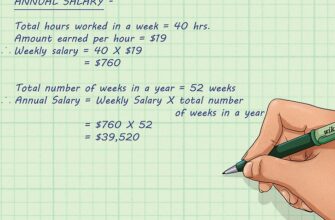
Before diving into calculations, it’s important to understand the standard practices for converting an hourly wage to an annual salary. The most common calculation assumes a full-time schedule of 40 hours per week and 52 weeks per year. This totals 2,080 hours annually. Therefore, to calculate the annual salary from an hourly wage, you multiply the hourly wage by 2,080.
Calculating Annual Salary from $38 an Hour
Simply multiply $38 by 2,080 to find the annual salary.
- Annual Salary = Hourly Wage x Total Hours Worked Annually
- Annual Salary = $38 x 2,080 = $79,040
Consequently, if you earn $38 an hour and work full-time, your annual salary will be approximately $79,040 before taxes and other deductions.
Factors Affecting Annual Salary
While the calculation seems straightforward, several factors can influence your take-home pay: overtime, holiday pay, health insurance, bonuses, and taxes. Understanding these factors can help you better estimate your actual annual earnings.
- Overtime Pay: Working more than 40 hours a week often qualifies you for overtime, which can significantly increase your salary.
- Holiday Pay: Many companies offer additional compensation for hours worked on holidays.
- Insurance and Benefits: Employer-provided healthcare and other benefits can affect your salary and compensation package.
Comparing $38 an Hour to Other Salaries
To put earning $38 an hour into perspective, let’s compare it to the national average and other common salary benchmarks. According to the U.S. Bureau of Labor Statistics, the median hourly wage for all workers was approximately $28 in 2022. This makes $38 per hour a competitive rate that allows for a comfortable lifestyle in many regions.
Managing Your Annual Earnings
Understanding how to manage a $79,040 salary effectively is essential for achieving your financial goals. Consider creating a budget to track spending, saving for retirement, and investing wisely.
- Create a Budget: Identify fixed expenses such as rent, utilities, and groceries, and allocate funds for savings and discretionary spending.
- Save for Retirement: Consider opening an IRA or contributing to a 401(k) plan to secure your financial future.
- Invest Wisely: Invest in diverse assets to grow your wealth over time.
Is $38 an Hour a Good Salary?
Whether $38 an hour is considered a good salary depends on various factors, including the cost of living in your area and your personal financial goals. While it may suffice for a comfortable lifestyle in many areas, it’s crucial to assess your situation to determine its adequacy.
FAQs on $38 an Hour Salary
- How much is $38 an hour annually? – Approximately $79,040 before taxes.
- What factors affect annual salary calculations? – Overtime, holiday pay, benefits, and taxes can impact your salary.
- Is $38 an hour considered a good wage? – It depends on the cost of living in your area and your financial needs.
- How can I manage my salary wisely? – Create a budget, save for retirement, and invest wisely.
- What industries pay $38 an hour? – Information technology, healthcare, engineering, and skilled trades.
Common Mistakes in Salary Calculations
Errors are common when estimating your annual income. Here are some prevalent mistakes and how to avoid them:
- Ignoring Taxes: Always consider taxes when estimating net income.
- Overlooking Benefits: Non-salary benefits like health insurance can alter the value of your compensation package.
- Miscalculating Hours: Ensure that calculations based on work hours are correct, especially if you’re working overtime.
Conclusion
Understanding your hourly wage in terms of annual salary is vital for effective financial planning. With $38 an hour translating to an approximate annual income of $79,040, understanding taxes and benefits is key to maximizing your financial management. Whether you’re saving for retirement or planning investments, careful budgeting can help you work towards your financial goals.