How Much Weight Can an Ant Carry?
When discussing strength in the animal kingdom, ants are frequently mentioned due to their incredible ability to carry objects much heavier than their own body weight. But just how much weight can an ant carry? This article delves deep into the fascinating world of ants, examining their lifting prowess, how they do it, and what this means for other fields such as robotics and engineering. Our comprehensive guide aims to answer all the questions you may have, optimize your search for this peculiar yet enticing topic, and provide insights backed by authoritative sources.
Understanding Ant Anatomy
Ants are small insects belonging to the Formicidae family. They are characterized by their segmented bodies, made up of a head, thorax, and abdomen. The strength of an ant primarily comes from its exoskeleton and muscle structure. Unlike humans, ants lack internal bones, which allows them greater flexibility and muscle density in their limbs. This unique anatomy contributes significantly to their lifting capabilities.
- Exoskeleton: The hard outer shell that provides structural support and protection.
- Muscle Structure: Optimized for maximizing force over a small area.
- Joint Flexibility: Aids in dispersing weight efficiently, allowing them to carry large loads.
The Physics of Ant Strength
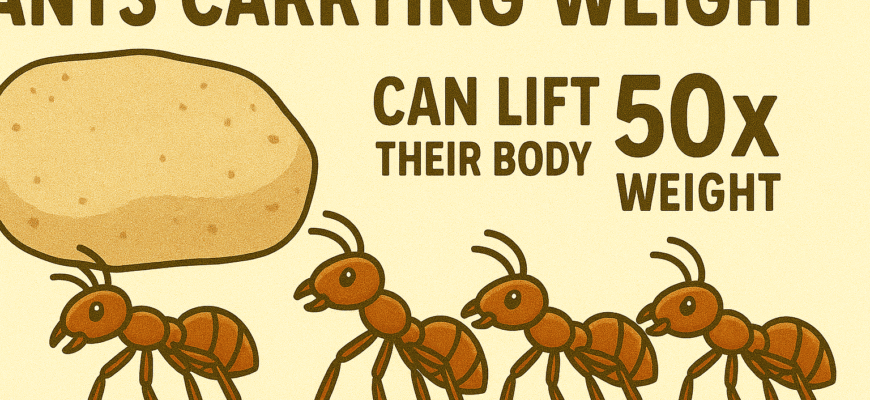
Ants are capable of carrying objects 10 to 50 times their body weight, depending on the species. The incredible strength of ants is often attributed to the laws of physics and scaling. As creatures become smaller, their muscles have a larger cross-sectional area relative to their volume. Thus, ants generate more force per unit of body weight than larger animals, enabling them to lift impressively large loads relative to their size.
Species with Superior Strength
Not all ants are created equal. Some species exhibit greater strength due to evolved traits that better suit their ecological niches. For instance:
- Leafcutter Ants: Known for carrying leaves three times their size, these ants possess strong mandibles specialized for cutting foliage.
- Army Ants: Predatory in nature, their muscular build allows for impressive weight-lifting capabilities necessary for hunting.
- Bull Ants: Larger than many other ant species, their size contributes to their ability to carry heavier loads.
How Do Ants Carry So Much Weight?
Ants leverage a set of physiological and behavioral adaptations to carry substantial weights. Their exoskeleton distributes weight evenly across their bodies, and their ability to collaborate in groups enables them to move exceedingly large objects. Ants also exhibit a behavior known as ‘swarming’, where multiple individuals work in concert to achieve a common goal.
Implications of Ant Strength in Technology
The study of ant strength has profound implications in fields like robotics and engineering. Researchers aim to replicate ant biomechanics to develop efficient robots capable of carrying heavy loads. This could transform industries reliant on heavy-lifting, especially in environments hostile to human workers. Ant-inspired innovations could lead to breakthroughs in disaster recovery, military logistics, and construction.
Scientific Studies and Insights
Various scientific studies have been conducted to explore the mechanics and genetics underlying ant strength. For example, a study published in the “Journal of Experimental Biology” revealed that ants use a combination of leverage and muscle action to achieve greater lifting capability. The genetic makeup of ants also plays a significant role in their strength, with specific genes identified to aid in muscle development.
FAQs on Ant Strength
| Question | Answer |
|---|---|
| How much weight can an ant carry? | Ants can carry objects 10 to 50 times their body weight, depending on the species. |
| What factors contribute to an ant’s strength? | Ant strength is due to their exoskeleton, muscle structure, and size-to-weight ratio. |
| Which ant species is the strongest? | Leafcutter ants and army ants are among the strongest due to their specialized traits. |
| How can ant strength be applied in technology? | Ant biomechanics inspire advancements in robotics and engineering for more efficient heavy-lifting capabilities. |
| Is it possible for ants to carry humans? | No, ants cannot carry humans due to existing weight and size limits relative to their own body mass. |
Common Queries About Ant Strength
Here are some frequently asked questions and simple answers to satisfy your curiosity about these incredible insects.
- Can ants move buildings or vehicles? Ants cannot move extremely large structures despite their impressive strength in relation to their size.
- What mistakes should scientists avoid when studying ants? Overestimating the scaling laws and neglecting the importance of ant colony behavior can lead to inaccurate conclusions.
- Are there any price differences when constructing ant-inspired robots? Generally, these robots may have a higher initial cost due to complex engineering but can reduce long-term expenses through efficiency.
- Which research is better suited for understanding ant strength? Studies focusing on biomechanics and genetic profiles are more informative on this topic.
- How do ants collaborate to move objects? Ants use collective intelligence and signaling to coordinate group efforts in carrying large objects.