- The Water Content of the Human Body: A Comprehensive Exploration
- How Much Water Is in the Human Body?
- Factors Influencing Water Composition
- The Role of Water in the Human Body
- Maintaining Hydration: How Much Should You Drink?
- Signs of Dehydration and Overhydration
- Special Considerations: Athletes and Water Composition
- Scientific Studies: What Experts Say About Water Composition
- Technology and Tracking Hydration Levels
- Conclusion
- FAQs
- What percentage of the adult human body is water?
- How does body composition affect water content?
- Is it possible to drink too much water?
- Why do infants have more body water than adults?
- Which technologies help track hydration levels?
The Water Content of the Human Body: A Comprehensive Exploration
Understanding how much water the human body is composed of is vital for maintaining health and well-being. This knowledge informs hydration practices and provides insights into the body’s complex mechanisms. In this exhaustive guide, we will delve into the percentage of water in the body, factors affecting it, and how to maintain optimal hydration levels.
How Much Water Is in the Human Body?
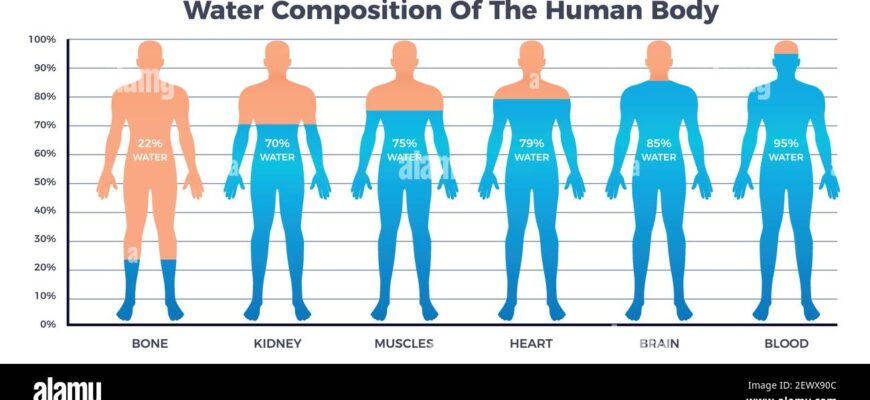
The human body is predominantly composed of water, typically comprising about 60% of an adult’s body weight. This percentage varies depending on age, gender, and body composition. For example, infants have a higher water content of around 75%, while elderly individuals may have a lower percentage.
Factors Influencing Water Composition
Several factors influence the water composition in the human body:
- Age: As people age, the percentage of body water decreases.
- Body Composition: Individuals with more fat tissue have a lower percentage of body water since fat tissue contains less water than lean tissue.
- Gender: Men typically have a higher water percentage than women due to differences in muscle mass.
The Role of Water in the Human Body
Water plays several crucial roles in the body:
- Regulating Temperature: It helps maintain a stable body temperature through sweating and respiration.
- Lubricating Joints: Water serves as a lubricant for joints.
- Transporting Nutrients: It carries nutrients and oxygen to cells and wastes away from them.
Maintaining Hydration: How Much Should You Drink?
The amount of water each individual needs can vary. However, a common recommendation is to consume eight 8-ounce glasses, equivalent to about 2 liters, or half a gallon a day. Factors like climate, physical activity, and individual health needs may necessitate adjustments.
Signs of Dehydration and Overhydration
Both dehydration and overhydration can lead to negative health outcomes. Symptoms of dehydration include:
- Dry mouth and skin
- Dizziness or lightheadedness
- Dark yellow urine
In contrast, symptoms of overhydration can include:
- Nausea
- Headache
- Confusion or disorientation
Special Considerations: Athletes and Water Composition
Athletes need to pay special attention to their hydration levels. Intense physical activity increases water loss through sweat. It’s crucial for athletes to monitor fluid balance and replenish fluids during and after workouts.
Scientific Studies: What Experts Say About Water Composition
Experts from the World Health Organization suggest personalized hydration strategies. Studies show the importance of considering individual differences in body water content when formulating these strategies. Renowned biochemists and nutritionists offer insights within their published papers available via PubMed.
Technology and Tracking Hydration Levels
With advancements in technology, there are now multiple gadgets available for tracking hydration. Smart water bottles with tracking capabilities can help individuals maintain proper hydration levels. These tools can provide personalized reminders based on your daily water needs.
Conclusion
The water content of the human body is a critical component of our overall health. By understanding how much water your body needs and maintaining optimal levels, you can support your body’s functions effectively. Keep track of your hydration needs and consider all factors, from age and body composition to climate and activity level, to ensure you stay healthy and hydrated.
FAQs
What percentage of the adult human body is water?
The adult human body is approximately 60% water.
How does body composition affect water content?
Individuals with higher muscle mass have a greater water percentage, whereas those with more fat tissue have less.
Is it possible to drink too much water?
Yes, overhydration can occur, leading to symptoms such as nausea and confusion.
Why do infants have more body water than adults?
Infants have a higher body water percentage because of their higher metabolic rate and growth needs.
Which technologies help track hydration levels?
Smart water bottles and hydration apps provide useful tools for tracking daily water intake.