- How Much Does One Liter of Water Weigh?
- What is the Weight of One Liter of Water?
- Factors Affecting the Weight of Water
- How Does Temperature Affect Water Weight?
- The Metric System and Water’s Weight
- Common Uses of Knowing Water’s Weight
- Is it Possible for Water to Weigh More Than One Kilogram?
- Common Mistakes in Understanding Water Weight
- Frequently Asked Questions
How Much Does One Liter of Water Weigh?
Water is an essential element of life and is crucial for various functions on Earth. Understanding the weight of water is important for a range of scientific, practical, and everyday applications. In this article, we will explore how much one liter of water weighs, utilizing related search queries, addressing common questions, and examining differentiators like temperature.
The weight of water can sometimes be a confusing topic due to variables such as temperature and pressure. Whether you’re a student, a professional in the field, or just a curious individual, this article aims to provide a comprehensive understanding of water’s weight and the factors influencing it. Let’s dive into the details about the weight of one liter of water and related concepts.
What is the Weight of One Liter of Water?
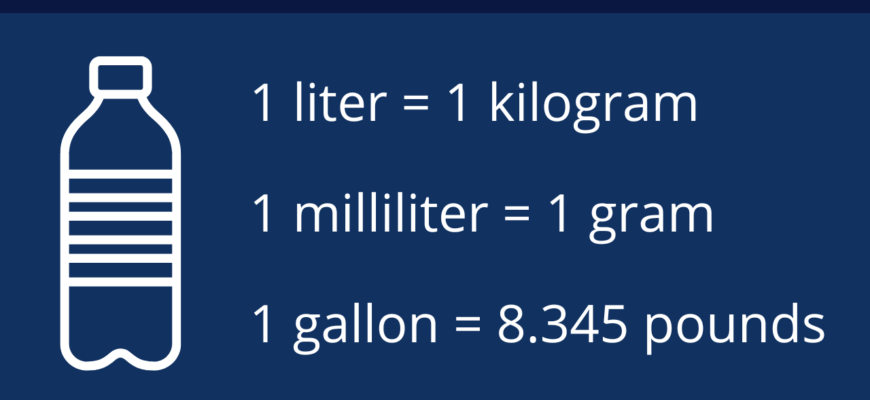
At its core, the weight of one liter of water at standard temperature and pressure (STP) is approximately one kilogram. This rule of thumb is grounded in the metric system, making calculations simple and straightforward for scientists and engineers. However, it’s crucial to know the conditions under which this applies.
Factors Affecting the Weight of Water
The weight of water isn’t always a fixed value due to several influencing factors:
- Temperature: As temperature increases, water can expand slightly, affecting its density and weight.
- Pressure: Changes in atmospheric pressure can cause slight variations in water’s weight.
- Impurities: The presence of other substances mixed in water can alter its weight.
How Does Temperature Affect Water Weight?
Temperature plays a significant role in determining the density and, asymptotically, the weight of water. As water is heated, its molecules move faster and further apart, leading to reduced density and a subsequent decrease in weight for the same volume. Here’s how temperature impacts water:
| Temperature (°C) | Approximate Density (g/cm³) | Weight of 1 Liter (kg) |
|---|---|---|
| 0 | 0.9998 | 0.9998 |
| 25 | 0.997 | 0.997 |
| 100 | 0.9584 | 0.9584 |
The Metric System and Water’s Weight
The metric system is intimately linked with water’s properties. One liter of water, under ideal conditions, weighs one kilogram because of the way the metric system was initially designed. This setup facilitates simpler conversions and calculations in scientific contexts.
Common Uses of Knowing Water’s Weight
Understanding the weight of water is vital for numerous fields:
- Cooking and Baking: Accurate measurements are crucial for recipes, particularly those relying on water as a primary ingredient.
- Scientific Research: Proportions and conversions involving water are frequent in chemistry and biology labs.
- Industry and Manufacturing: Processes reliant on specific quantities of water require exact weight calculations.
Is it Possible for Water to Weigh More Than One Kilogram?
Yes, water can weigh more than one kilogram per liter under certain conditions, depending on the substances dissolved or suspended in it. Adding impurities or solutes like salt can increase the overall weight of the water.
Common Mistakes in Understanding Water Weight
A prevalent misunderstanding is neglecting the impact of temperature and impurities when calculating water’s weight. Always consider the environmental conditions and the purity of the water for accurate measurements.
Frequently Asked Questions
- How much does a liter of water weigh?
At standard room temperature and pressure, one liter of water typically weighs one kilogram.
- Does temperature affect the weight of water?
Yes, as temperature increases, the density decreases, which can lead to a slight reduction in weight per liter.
- What is the density of water at 25°C?
The density of water at 25°C is approximately 0.997 g/cm³, making a liter weigh around 0.997 kg.
- Can dissolved substances change water’s weight?
Yes, adding solutes like salt to water increases its density and overall weight.
- Why is water’s weight important in cooking?
Exact measurements ensure recipes turn out correctly, especially when water is a fundamental ingredient.